
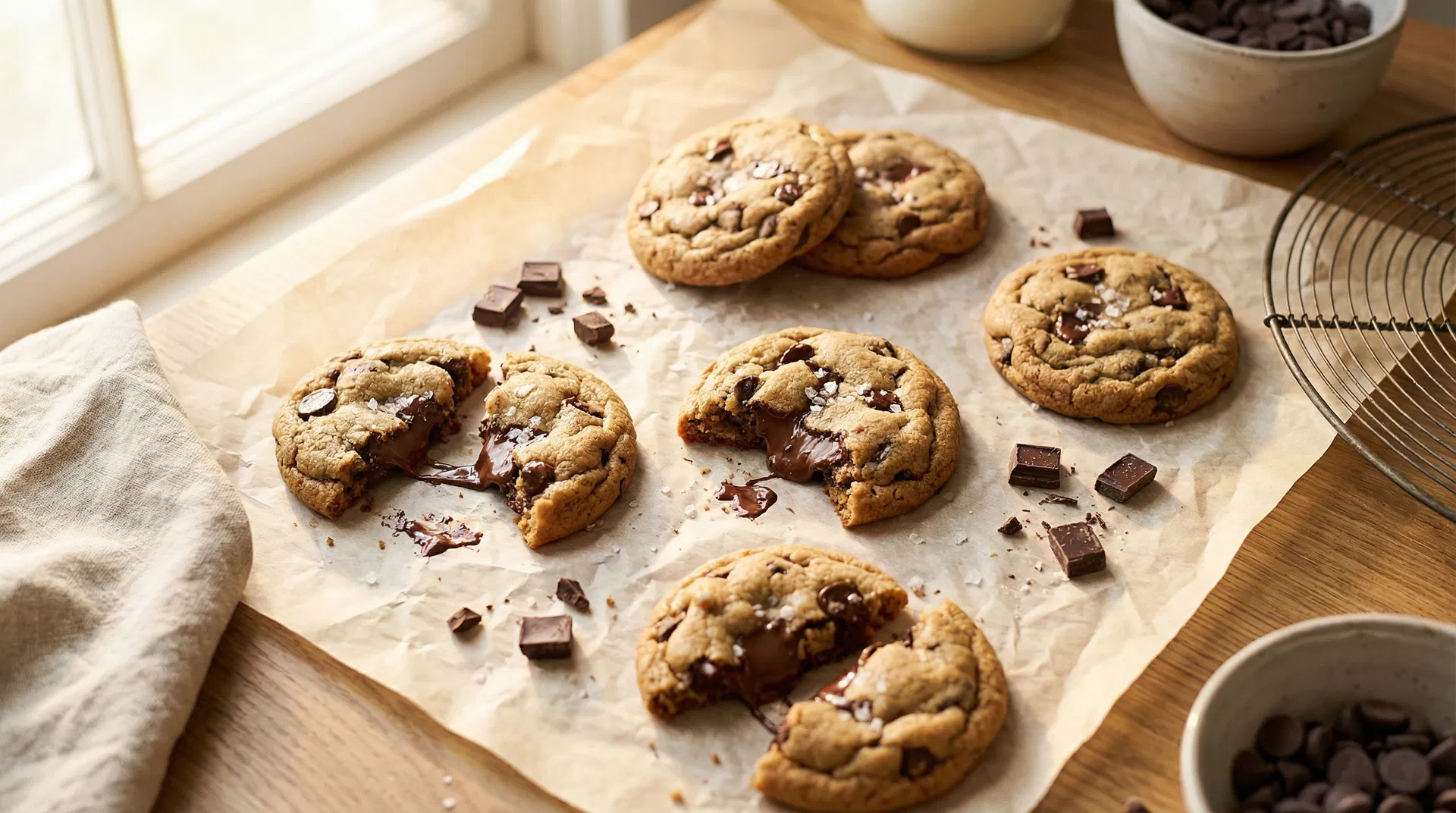
The Secret to Bakery-Style Chocolate Chip Cookies at Home
I've made thousands of cookies. And the single biggest upgrade you can make — the one that takes a good cookie to a great one — is browning your butter. Here's exactly how I do it, and why it works.
Why Brown Butter Changes Everything
When you brown butter, you're doing something called the Maillard reaction — the same chemical process that makes toast golden and steak caramelized. The milk solids in the butter toast and develop dozens of new flavor compounds: nutty, caramel-like, almost toffee-ish. It's the difference between a cookie that tastes like butter and one that tastes like something you'd pay $5 for at a bakery.
The Technique (It's Easier Than You Think)
Use a light-colored pan so you can see the color change. Medium heat. Swirl constantly. You'll see it foam, then the foam will subside, and you'll start to see golden-brown bits forming at the bottom. That's the good stuff. Pull it off the heat the second it smells nutty and looks amber — it goes from perfect to burnt fast. Pour it immediately into your mixing bowl to stop the cooking.
One More Secret: Chill the Dough
After you mix everything together, cover the bowl and put it in the fridge for at least an hour. Overnight is better. The rest time lets the flour hydrate fully and the flavors develop. You'll get a cookie that's thicker, chewier, and has more complex flavor. This is non-negotiable in my kitchen.
Why Mine Are Different
Every batch I make at Smith's Sweets uses browned butter, quality chocolate, and rested dough. I'm not cutting corners to speed up the process. The result is a cookie that people remember — and that's the whole point.
Ashlyn's Brown Butter Chocolate Chip Cookies
Ingredients
- 2¼ cups all-purpose flour
- 1 tsp baking soda
- 1 tsp fine sea salt
- 1 cup (2 sticks) unsalted butter
- ¾ cup granulated sugar
- ¾ cup packed brown sugar
- 2 large eggs
- 2 tsp pure vanilla extract
- 2 cups semi-sweet chocolate chips
- Flaky sea salt for finishing
Instructions
- 1Brown the butter in a light-colored pan over medium heat until golden and nutty, about 5–7 minutes. Pour into a large bowl and cool 10 minutes.
- 2Whisk both sugars into the browned butter. Add eggs one at a time, whisking well. Add vanilla.
- 3Stir in flour, baking soda, and salt until just combined. Fold in chocolate chips.
- 4Cover and refrigerate at least 1 hour (overnight preferred).
- 5Preheat oven to 375°F. Scoop 2-tablespoon balls onto parchment-lined sheets.
- 6Bake 10–12 minutes until edges are set but centers look slightly underdone.
- 7Sprinkle with flaky salt immediately. Cool on pan 5 minutes before transferring.
Order from Ashlyn Instead
Skip the kitchen and let Smith's Sweets handle it. Baked to order, ready for pickup.
Place Your Order